

No. 9 (2012): Dossiê "Forças de opressão e estratégias de resistência na cultura contemporânea"
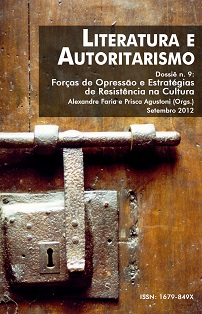
Capa do Dossiê n. 9 do Periódico Literatura e Autoritarismo com o título "Forças de Opressão e Estratégias de Resistência na Cultura"

The dossier "Forces of oppression and strategies of resistance in contemporary culture" was proposed based on two basic perceptions: that mechanisms of control and oppression of capitalism, although not the same as the experiences of the polarized world during the Cold War, still they are present in the globalized society; and that resistance forces are still emphatically manifested in culture and literature. In this sense, the heterogeneity of objects and approaches addressed in the articles that make up this volume attests that those perceptions were correct and that literature (still) constitutes a fertile soil to express the successes and failures of individuals in the world, in addition to allowing listening, in its most varied forms and intentions, of the voices that persist in speaking, contrasting, silencing, elaborating, translating a certain way of feeling, thinking and living their own social and cultural context.

Published: 2012-09-01

Apresentação

  • Dossier "Forces of oppression and strategies of resistance in contemporary culture"

    Alexandre Faria, Prisca Agustoni
    1-3
    DOI: https://doi.org/10.5902/1679849X75288

Artigos

  • The (im)possible answer - Clarice Lispector and the obligation to testify

    Ettore Finazzi- Agrò
    4-15
    DOI: https://doi.org/10.5902/1679849X75287
  • Allegories of the defeat of Caio F.

    Roberto Círio Nogueira
    16-30
    DOI: https://doi.org/10.5902/1679849X75289
  • Eva Luna and Scheherazade: weavers of fate

    Cinara Ferreira Pavani
    15-30
    DOI: https://doi.org/10.5902/1679849X75391
  • The reality of trauma: fictional configurations in the novel Em câmara lenta, by Renato Tapajós

    Lucas dos Passos
    31-50
    DOI: https://doi.org/10.5902/1679849X75301
  • Interventions in the public sphere: what kind of pornography destabilizes a conservative reception?

    Fernanda Pires Alvarenga Fernandes
    51-68
    DOI: https://doi.org/10.5902/1679849X75302
  • Forgetting, silencing or sharing trauma: some experiences of traumatic memory in contemporary culture

    Julia Massucheti Tomasi
    69-86
    DOI: https://doi.org/10.5902/1679849X75303
  • Intellectual challenges and disappointments in modern Italy

    Andrea Santurbano
    87-99
    DOI: https://doi.org/10.5902/1679849X75304
  • La métaphore contre l’opression salazariste: the last days of Portuguese fascism (1959) by Maria Archer

    Armanda Manguito Bouzy
    100-125
    DOI: https://doi.org/10.5902/1679849X75305
  • Literature and politics: way of life or way-of-life?

    Patricia Peterle
    126-140
    DOI: https://doi.org/10.5902/1679849X75378
  • About Anas and Marias (Or How Everything Changes and Stays the Same) A reading on perplexities and warnings in Hilda Hilst

    Tatiana Franca Rodrigues
    141-155
    DOI: https://doi.org/10.5902/1679849X75379
  • Memory and narration: the lived and the symbolic recreated through language, an instrument of resistance in times of exception

    Scheila Mara Batista Pereira Lopes
    156-172
    DOI: https://doi.org/10.5902/1679849X75380

Entrevista

  • “Don't call me a victim” - Interview with Dina Yafasova

    Vinicius Mariano de Carvalho
    173-178
    DOI: https://doi.org/10.5902/1679849X75388