Salim Miguel's role as a bookseller and the reflections of this period with the coup of 1964
DOI:
https://doi.org/10.5902/1679849X84130Keywords:
Bookstores, Literary System, Literary Field, Salim MiguelAbstract
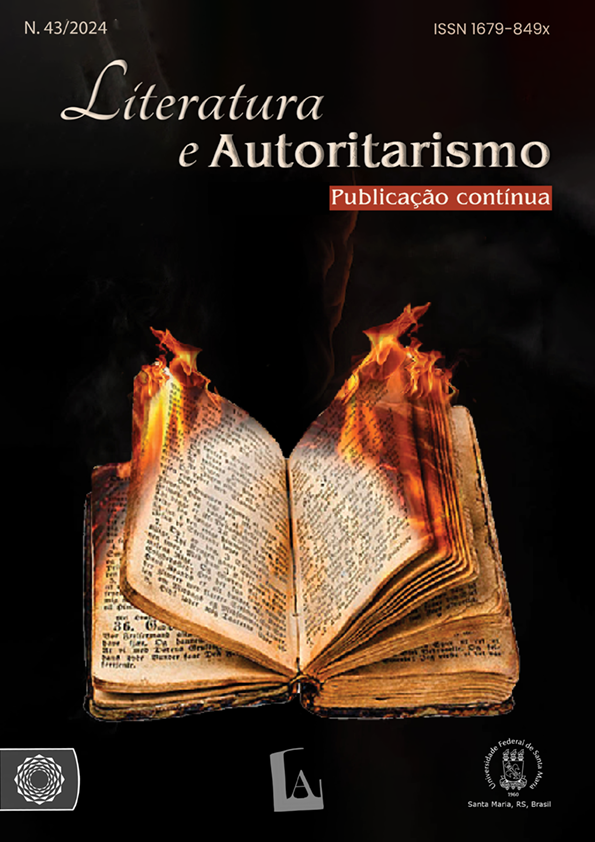
This article discusses Salim Miguel’s role as a bookseller at Anita Garibaldi bookstore, and its relevance as a “producer” of the literary system (EVEN-ZOHAR), that acted against the military dictatorship (1964-985). Along with his partner, Miguel opened the business in 1953, in Florianópolis (SC). Over time, the place became known as “Salim's bookstore”. When the 1964 coup came, people from civil society invaded the bookstore and made a bonfire with the books in XV de Novembro square. At the time, Salim Miguel was no longer one of the owners. However, his name was still a reference and the military believed that he still influenced the choice of books. Miguel was arrested and psychologically tortured.
Downloads
References
CANDIDO, Antonio. O direito à literatura. In: Vários escritos. Rio de Janeiro: Ouro sobre azul, p. 171-193, 2011.
CARNEIRO, Maria Luiza Tucci. Livros proibidos, ideias malditas: o DEOPS e as minorias silenciadas. São Paulo: Ateliê Editorial/ PROIN Fapesp, 2002.
EVEN-ZOHAR, Itamar. Introduction [to Polysystem Studies] e Polysystem Theory. Polysystem Studies. Poetics Today, v.11, n.1, p. 9-26,1990.
GUERRA, Rogério F.; BLASS, Arno. Grupo Sul e a Revolução Modernista em Santa Catarina. Revista de Ciências Humanas, Florianópolis, v. 43, n. 1, p. 9-95, abr. 2009.
HALLEWELL, Laurence. O livro no Brasil. São Paulo: Edusp, 2005.
LAJOLO, Marisa. A leitura da formação da literatura brasileira de Antonio Candido. In: SERNA, Jorge Ruedas de la (Org.). História e literatura: homenagem a Antonio Candido. Campinas, SP: EdUnicamp/ Fundação Memorial da América Latina: São Paulo: Imprensa Oficial do Estado, 2003.
MACHADO, Ubiratan. Pequeno guia histórico das livrarias brasileiras. São Paulo: Ateliê, 2008.
MANGUEL, Alberto. Uma história da leitura. São Paulo: Companhia das Letras, 1997.
MATOS, Felipe; CUNHA, Maria Teresa Santos. Entre chamas e labaredas: histórias de fogueiras de impressos em Florianópolis no século XX. Anos 90, Porto Alegre, v. 25, n. 48, p. 299-326, dez. 2018.
MIGUEL, Salim. Primeiro de abril: narrativas da cadeia. Palhoça: EdUnisul, 2015.
MIGUEL, Salim; MALHEIROS, Eglê. Memória de editor. Florianópolis: Escritório do Livro, 2002.
REIMÃO, Sandra. Proíbo a publicação e circulação... censura a livros na ditadura militar. Estudos Avançados, v. 28, n. 80, p. 75-90, 2014.
STEINER, George. Aqueles que queimam livros. Belo Horizonte: Âyiné. 2017.
UNIVERSIDADE FEDERAL DE SANTA CATARINA. Relatório Final da Comissão Memória e Verdade da Universidade Federal de Santa Catarina. V. 1, Santa Catarina, 2018.
VIEIRA, Luiz Renato. Consagrados e malditos: os intelectuais e a editora Civilização Brasileira. Brasília: Thesaurus, 1998.
VILLARINO PARDO, M. C. Aproximação à obra de Nélida Piñon: a república dos sonhos. Tese de Doutorado. Universidade de Santiago de Compostela. Santiago de Compostela, 2000.
Downloads
Published
Issue
Section
License
Copyright (c) 2024 Literatura e Autoritarismo

This work is licensed under a Creative Commons Attribution-NonCommercial-ShareAlike 4.0 International License.
DECLARAÇÃO DE ORIGINALIDADE E EXCLUSIVIDADE E CESSÃO DE DIREITOS AUTORAIS
Declaro que o presente artigo é original e não foi submetido à publicação em qualquer outro periódico nacional ou internacional, quer seja em parte ou na íntegra. Declaro, ainda, que após publicado pela Literatura e Autoritarismo, ele jamais será submetido a outro periódico. Também tenho ciência que a submissão dos originais à Literatura e Autoritarismo implica transferência dos direitos autorais da publicação digital. A não observância desse compromisso submeterá o infrator a sanções e penas previstas na Lei de Proteção de Direitos Autorais (nº 9610, de 19/02/98).