Towards a unified theory of happiness: Nozick versus Haybron
DOI:
https://doi.org/10.5902/2179378692925Schlagworte:
Happiness, Emotion, Subjective well-beingAbstract
In this paper, I present a puzzle, an inconsistent triad of claims, pertaining to common views about the nature and significance of happiness. I argue that viewing happiness as an emotion helps us to resolve this puzzle by introducing conditions of when which emotions are appropriate. I reject Haybron’s view that our notion of happiness is ambiguous, and I side with Nozick on how to combine different elements in a unified theory of happiness. I point out that unification at the semantic level leaves other issues open.
Downloads
Literaturhinweise
Annas, J. Happiness as achievement. Daedalus, 133(2), pp.44-51, 2004. DOI: https://doi.org/10.1162/001152604323049389
Aristotle, Nicomachean Ethics, ed. and translated by R. Crisp, Cambridge University press, 2000. DOI: https://doi.org/10.1017/CBO9780511802058
Bentham, J. An Introduction to the Principles of Morals and Legislation. 1781 ed. Source: http://www.utilitarianism.com/jeremy-bentham/index.html
Ekman, P., Dalgleish, T. and Power, M. Basic emotions. San Francisco, 1999. DOI: https://doi.org/10.1002/0470013494.ch3
Ekman, P. and Friesen, W.V. Constants across cultures in the face and emotion. Journal of personality and social psychology, 17(2), pp.124-129, 1971. DOI: https://doi.org/10.1037/h0030377
Gruber, J., Mauss, I.B. and Tamir, M. A dark side of happiness? How, when, and why happiness is not always good. Perspectives on psychological science, 6(3), pp.222-233, 2011. DOI: https://doi.org/10.1177/1745691611406927
Haybron, D.M. On Being Happy or Unhappy 1. Philosophy and Phenomenological Research, 71(2), pp.287-317, 2005. DOI: https://doi.org/10.1111/j.1933-1592.2005.tb00450.x
Haybron, D.M. Happiness: A very short introduction (Vol. 360). Oxford University Press, 2013. DOI: https://doi.org/10.1093/actrade/9780199590605.001.0001
Kahneman, D. Objective Happiness. In: Kahneman, D., Diener, E. and Schwarz, N., Eds., Well-Being: The Foundations of Hedonic Psychology, Russell Sage Foundation, New York, 3-25, 1999.
Kahneman, D. and Sugden, R. Experienced utility as a standard of policy evaluation. Environmental and resource economics, 32, pp.161-181, 2005. DOI: https://doi.org/10.1007/s10640-005-6032-4
Kant, I. Groundwork for the Metaphysics of Morals. Ed. by Schneewind, J. Yale University Press, 2002.
Layard, R. Happiness, Lessons from a New Science, 2nd edition, Penguin: London 2011.
Layard, R. Happiness and public policy: A challenge to the profession. The economic journal, 116(510), pp. C24-C33, 2006. DOI: https://doi.org/10.1111/j.1468-0297.2006.01073.x
Layard, R. and De Neve, J.E. Wellbeing. Cambridge University Press, 2023. DOI: https://doi.org/10.1017/9781009298957
Nesse, R.M. Natural selection and the elusiveness of happiness. Philosophical Transactions of the Royal Society of London. Series B: Biological Sciences, 359(1449), pp.1333-1347, 2004. DOI: https://doi.org/10.1098/rstb.2004.1511
Nettle, D. Happiness: The science behind your smile. Oxford University Press, 2005. DOI: https://doi.org/10.1093/oso/9780192805584.001.0001
Nozick, R. The examined life: Philosophical meditations. Simon and Schuster, 1989.
Nussbaum, M.C. Who is the happy warrior? Philosophy, happiness research, and public policy. International Review of Economics, 59(4), pp.335-361, 2012. DOI: https://doi.org/10.1007/s12232-012-0168-7
Sizer, L. Good and good for you: An affect theory of happiness. Philosophy and Phenomenological Research, 80(1), pp.133-163, 2010. DOI: https://doi.org/10.1111/j.1933-1592.2009.00313.x
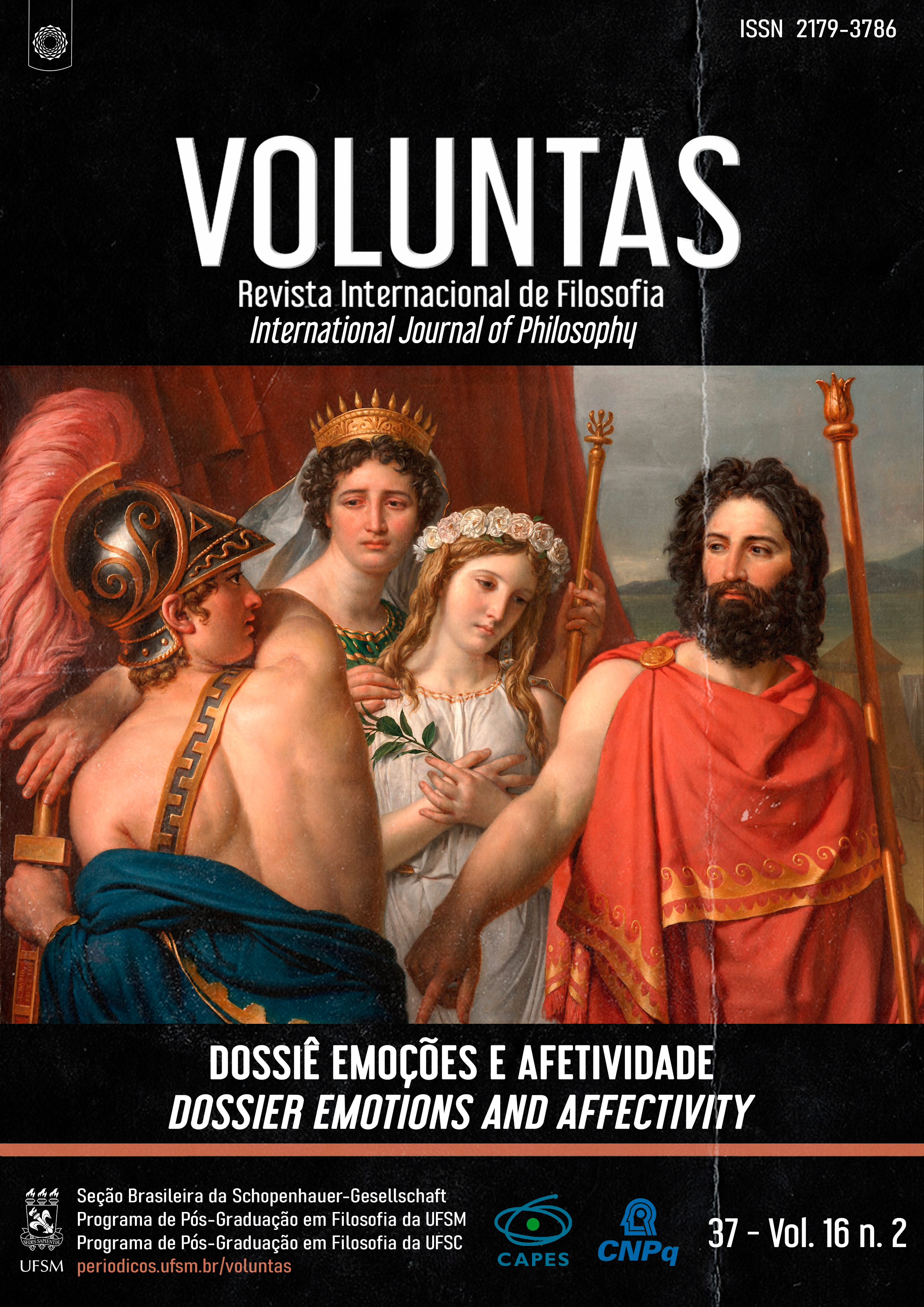
Downloads
Veröffentlicht
Ausgabe
Rubrik
Lizenz
Copyright (c) 2025 Christian Piller

Dieses Werk steht unter der Lizenz Creative Commons Namensnennung - Nicht-kommerziell - Weitergabe unter gleichen Bedingungen 4.0 International.
Die Einreichung von Originalen an diese Zeitschrift impliziert seitens der Autoren die Übertragung der Rechte zur gedruckten und digitalen Veröffentlichung. Die Urheberrechte für die publizierten Artikel liegen beim Autor, wobei der Zeitschrift das Recht zur Erstveröffentlicheng zukommt. Die Autoren dürfen dieselben Resultate in anderen Publikationen verwenden, wenn sie deutlich auf unsere Zeitschrift als ursprüngliches Publikationsmedium hinweisen.
Lizenz
Creative Commons Namensnennung - Nicht-kommerziell - Weitergabe unter gleichen Bedingungen 4.0 International (CC BY-NC-SA 4.0).